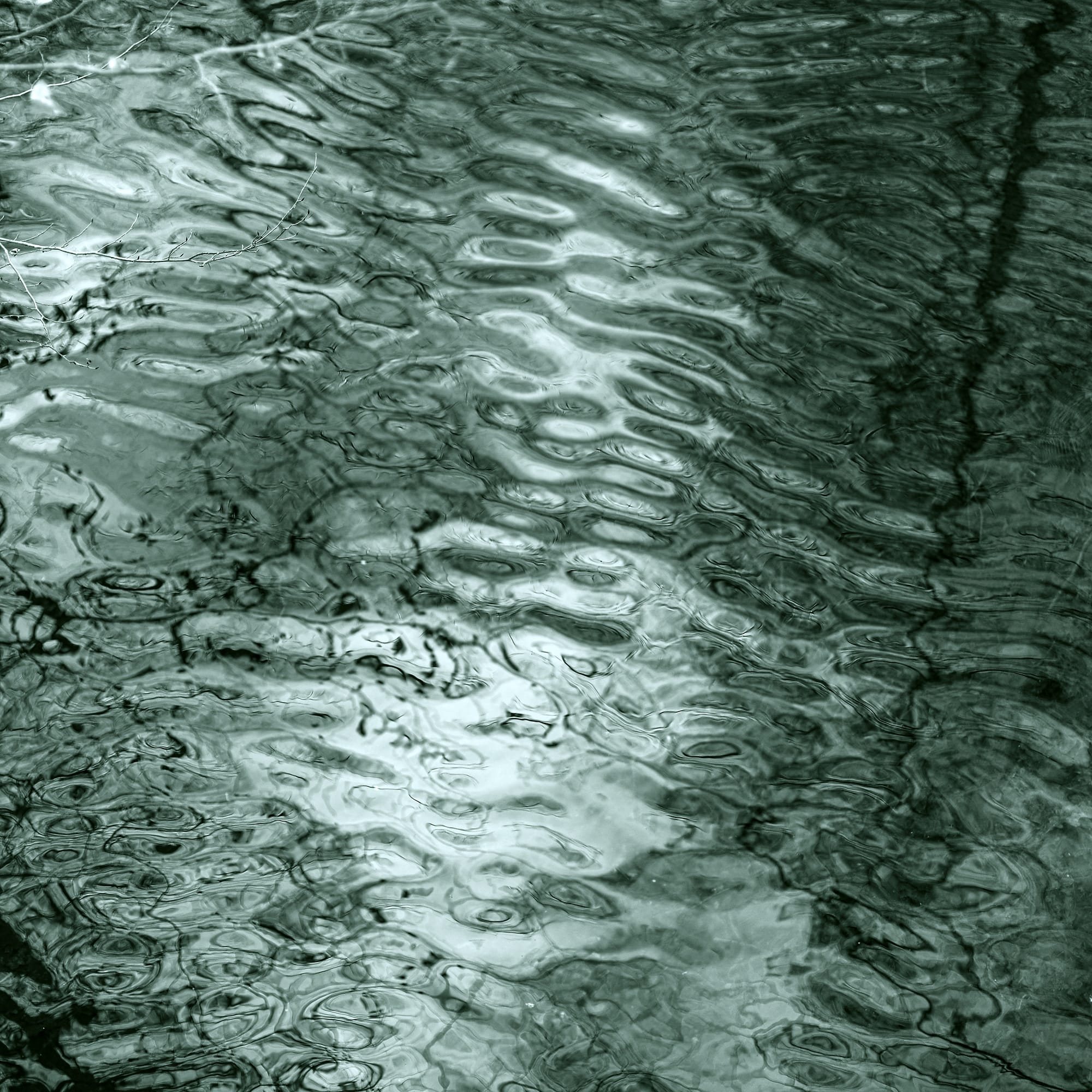
Photography can transform the most ordinary details into something unfamiliar. For German visual artist Marcel van Beek, water becomes both subject and collaborator, creating its own fleeting patterns through condensation, reflections, ripples, bubbles and ice. In his series Water as a Scriptor, these natural processes blur the boundaries between photography, painting and abstraction, inviting us to question what we are seeing and at what scale. In this interview, Marcel explores the ideas behind the series, the balance between chance and control, and how photography can reveal a visual language already present in the natural world.
Can you tell us a little about yourself and how you became interested in photography?
I am a German visual artist based in Leipzig. I studied Fine Art at Alanus University of Arts and Social Sciences, with painting, graphic art and photography all forming part of my training. Painting was initially the strongest centre of gravity, but photography became increasingly important because it took me out of the solitude of the studio and placed me in direct contact with light, weather, material and chance. I was fascinated by the fact that a photograph could begin with something entirely real and still open into a space that felt unfamiliar, symbolic or almost dreamlike.
My interest developed less through spectacular subjects than through ordinary things that seemed to change when I looked at them closely: light falling across a wall, a water surface, a curtain, vegetation or an empty architectural space. Over time, that became a broader practice concerned with landscape, ecology, the built environment and perception. I usually work in series because returning to a material or visual question allows relationships to emerge that a single image cannot contain. Water has become especially important because it is never simply one thing. It reflects, obscures, dissolves, freezes, carries traces and continually alters the appearance of whatever it touches.
How have painting, graphic art and scenic design shaped your photography?
Painting remains the strongest influence on the way I shape a photograph. I still think in terms of surface, tonal relationships, colour fields and compositional tension. Scenic design sharpened my awareness of space and thresholds, and of the way a single form can charge an environment. Graphic art strengthened my sense of reduction, line, contrast and structure. Photography brings all of those ways of thinking together, but it also introduces something essential that the other media do not give me in the same way: the resistance and unpredictability of the world itself.
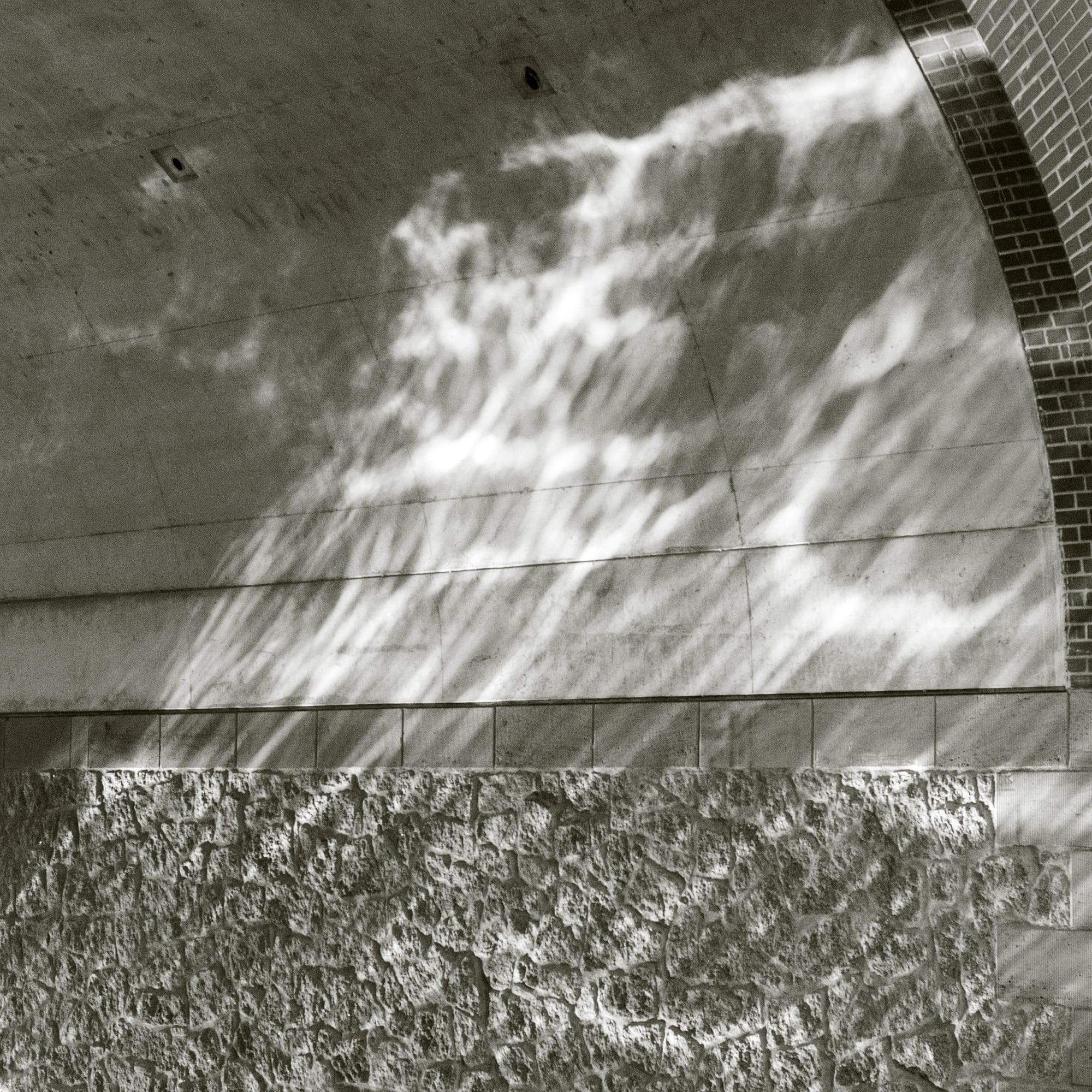
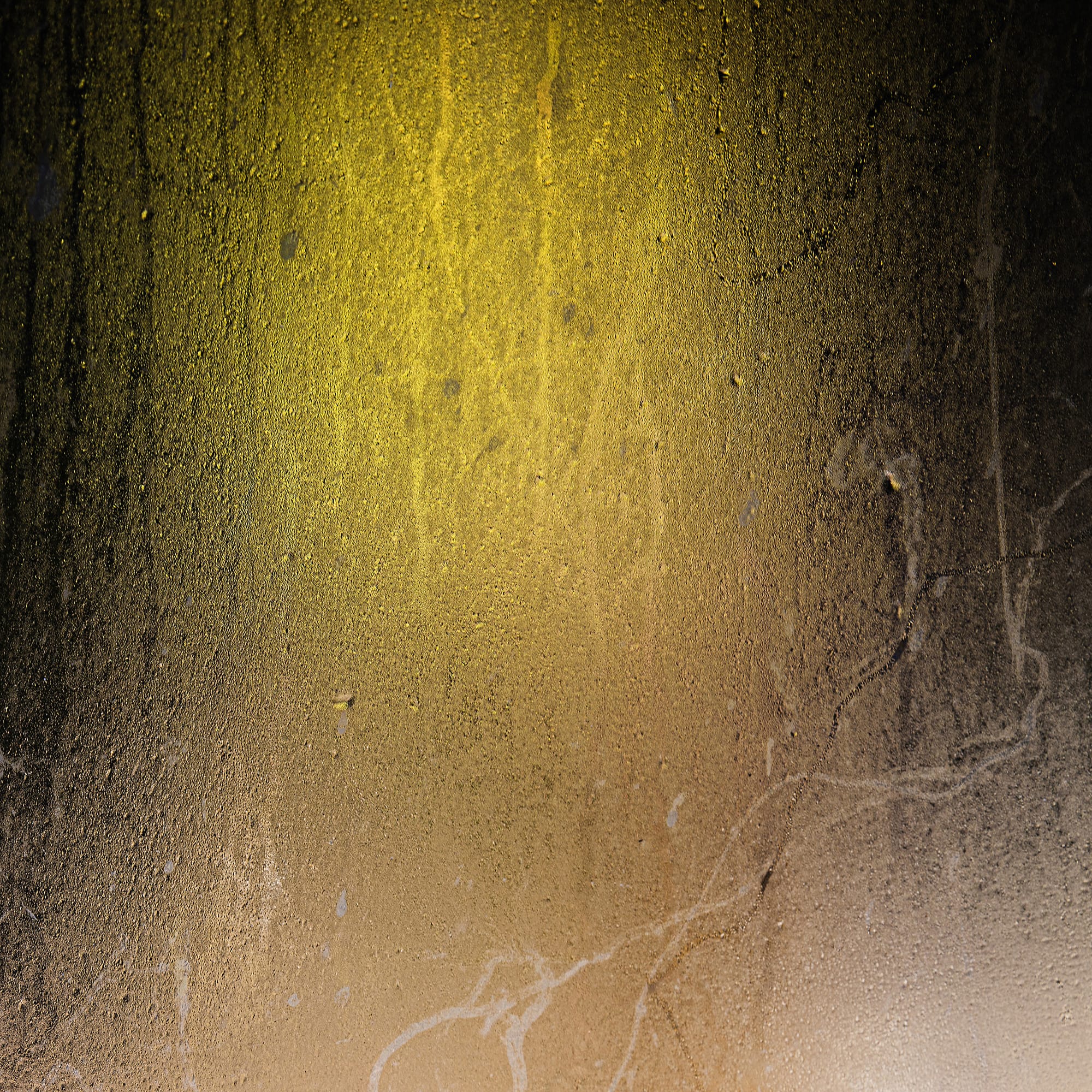
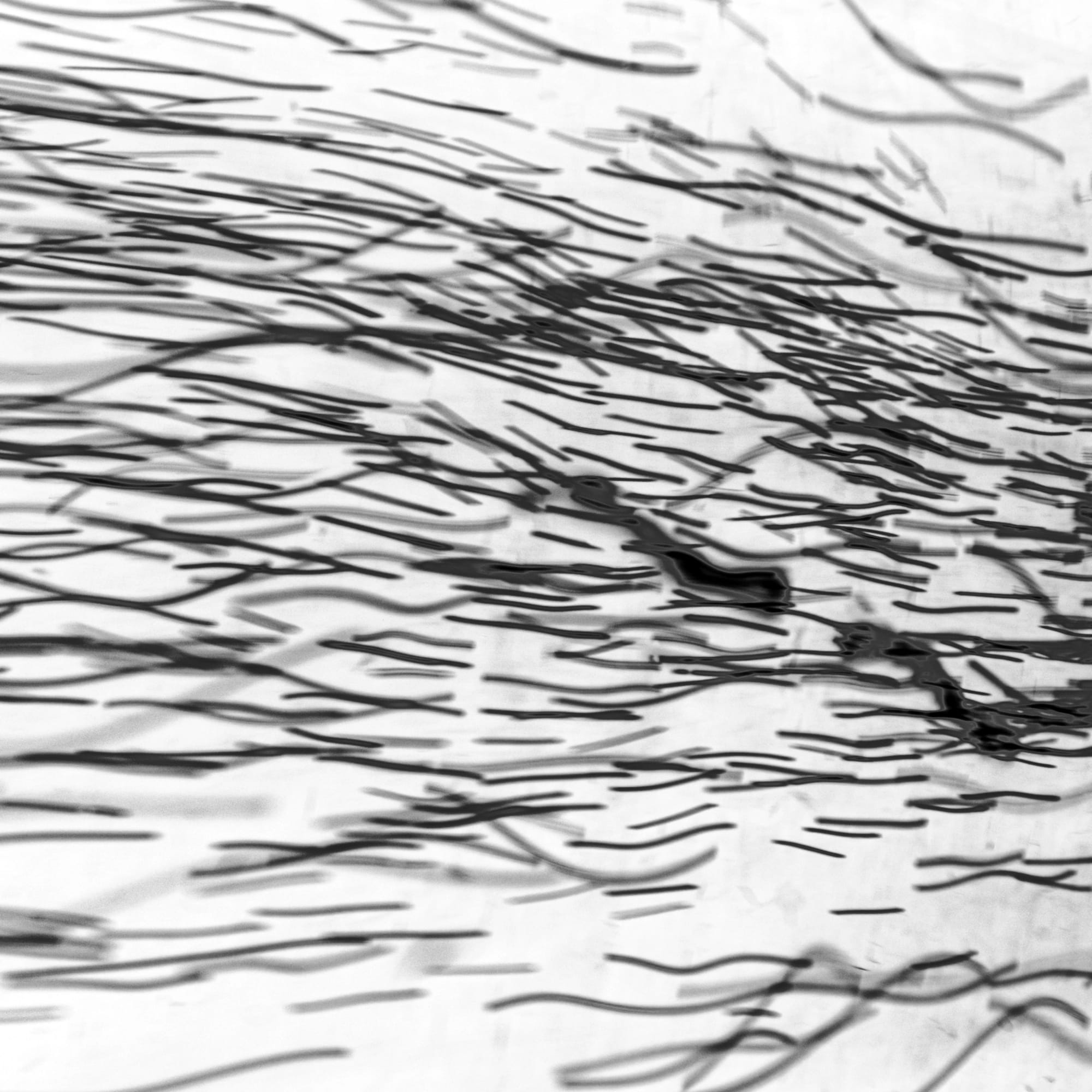
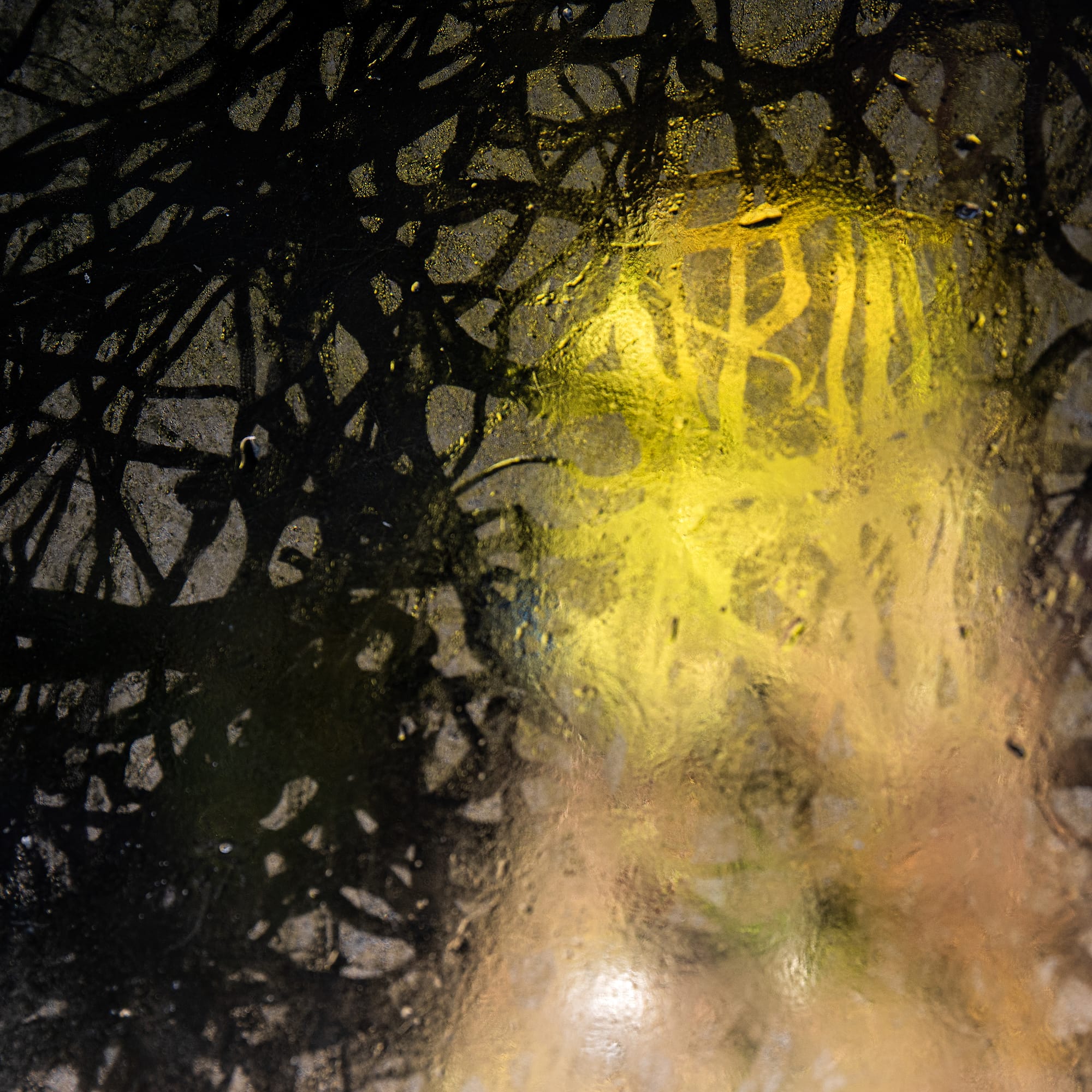
Water as a Scriptor makes these different influences quite visible. Citrinitas can be read almost as a painterly colour field, built from yellow light, moisture and fine traces. Flux of Thoughts has the economy of a graphic drawing, although its dark, calligraphic marks are generated by bubbles in motion. In Plato’s Bridge Allegory, reflected water projects a luminous form onto an architectural wall, which connects strongly to my earlier interest in staging, projection and spatial transformation. Yet in each case, the decisive form was not drawn or constructed by me. Photography allows me to encounter something already happening and then recognise the image within it.
How did the idea for Water as a Scriptor first emerge?
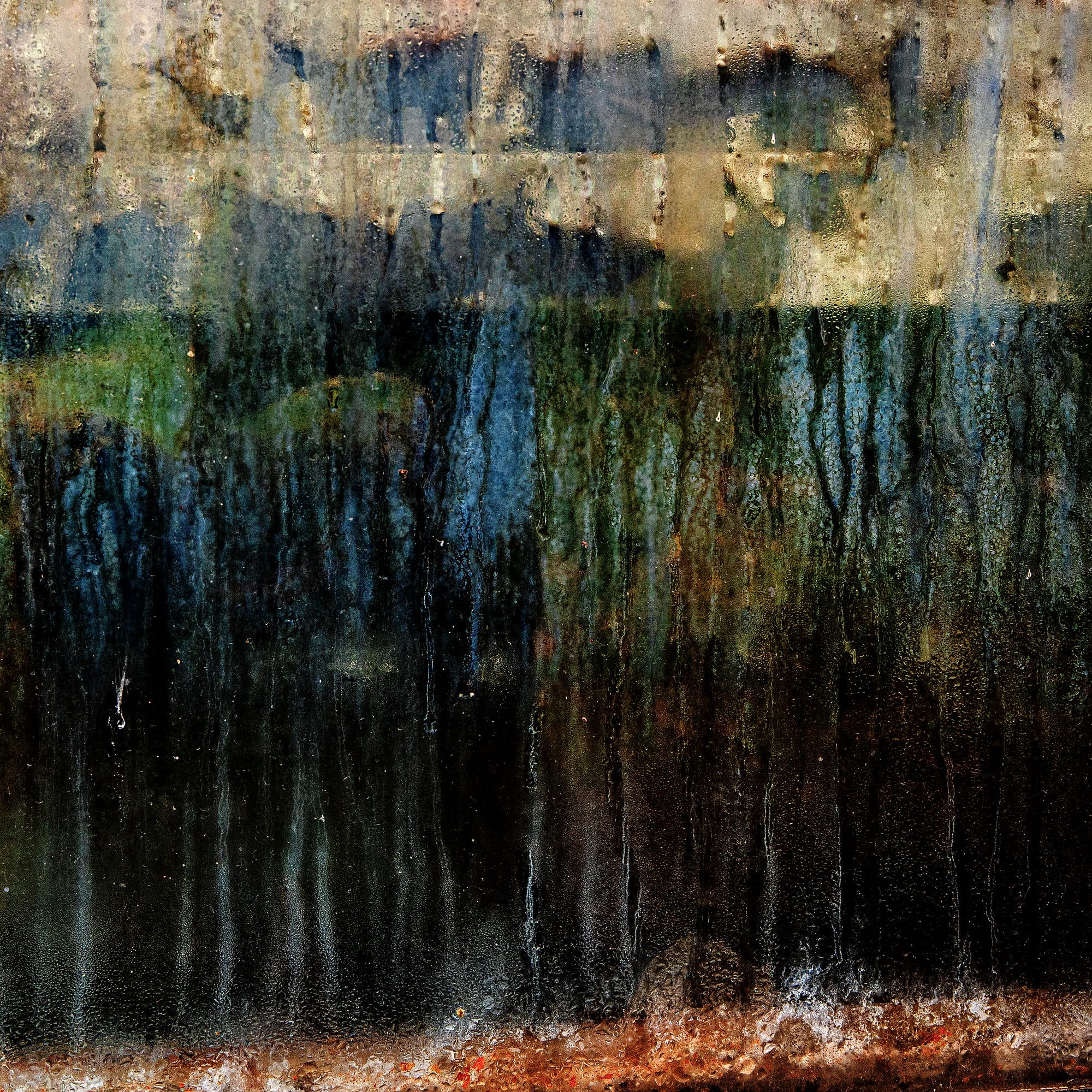
Typically, I do not begin a project with a fully formulated concept. I tend to respond spontaneously to something that catches my attention and only later begin to understand its wider potential. In this case, the starting point was a visit to a greenhouse, where I became fascinated by the patterns of condensation on the glass. I realised that the moisture was not simply obscuring the view; it was actively reorganising the image, turning the pane into a temporary image-making surface in its own right. In Inside and Out, for example, a yellow rectilinear structure seen through condensation seems to stabilise for a moment as a window or sign, while the moisture makes it impossible to be entirely certain whether one is looking inwards or outwards.
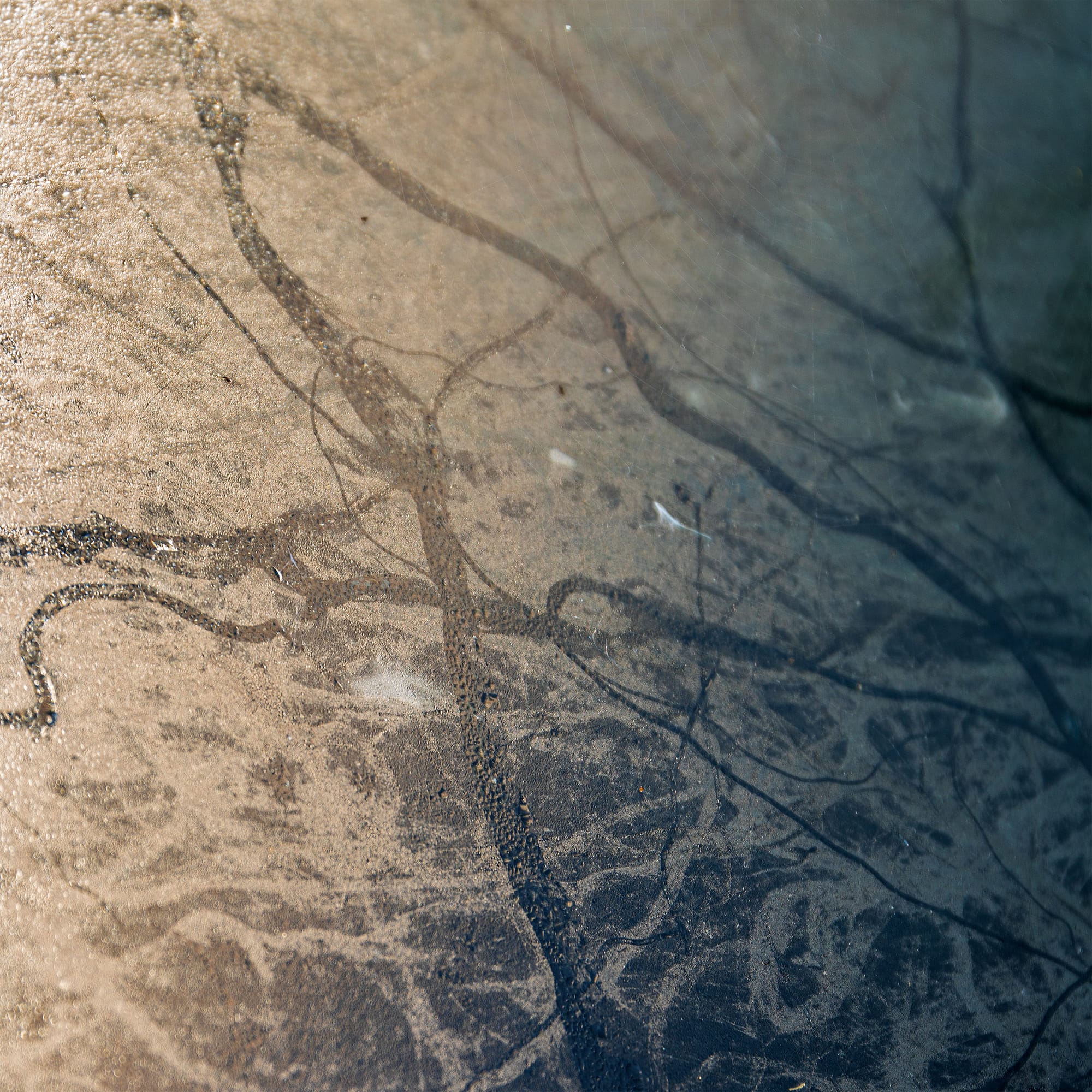
From there, I became more attentive to the different ways water could leave or produce visual traces. In Citrinitas, condensation, snail trails and yellow light create a luminous field that seems almost to glow from within. Light Script moves further towards inscription: moisture and the tracks of gastropods begin to resemble glyphs or fragments of an unknown alphabet. The series then expanded beyond glass into reflections, ripples, bubbles, projected light and frozen states.
The title Water as a Scriptor eventually gave me the conceptual key. A scriptor is one who writes, but here the writing is produced through movement, reflection, residue, light and phase change. I wanted to follow that visual language without reducing it to a single technique or metaphor.
Do you see yourself as the author, observer or collaborator in these natural processes?
Collaborator is probably the closest word, although I would not want to deny the photographer’s responsibility as author. I decide where to look, when to make the exposure, how to frame, what to exclude, and later how the photographs are edited, titled and sequenced. But many of the actual marks within these images are not mine. That distinction is central to the series.
In Flux of Thoughts, the moving bubbles generate a dense field of strokes that can resemble calligraphy, but I do not draw those lines. In Light Script, the trails of gastropods and films of moisture already exist on the pane before the camera translates them into an image. With Ripples, water is simultaneously surface, movement and image-maker: the reflected environment is continuously broken apart and rewritten by the water itself.
I think of my role as setting up an encounter and then recognising when a physical process has produced something visually and conceptually compelling. It is not passive observation, but neither is it total control. The idea of shared authorship is important to me because it gives the material world genuine agency rather than using nature simply as raw material for a preconceived picture.
How do you balance control and chance in your work?
I usually begin with a clear field of attention rather than with a fixed image. I can control the camera position, focus, exposure, timing and the way I frame a surface, but I do not want to prescribe the exact form that water must take. The work needs enough openness for the material process to surprise me. That is often where the image becomes more than an illustration of an idea.
Plato’s Bridge Allegory is a good example. A reflection generated by moving water throws a luminous, unstable form across an architectural wall. I could choose the viewpoint and wait for the moment when the projection had the right density and relationship to the architecture, but I could not design the exact geometry of the light. The same is true of condensation, bubbles or snail traces: I can respond to them, but not fully direct them.
The more controlled phase comes afterwards. I edit slowly and ask whether the unexpected element has acquired formal precision rather than remaining a mere accident. Chance alone is not enough. I keep an image when structure, atmosphere and ambiguity hold together and when it continues to resist a quick reading. In that sense, the process is open at the moment of encounter and rigorous in the act of selection.
Why is creating the essential image in-camera important to you?
I would make one distinction here: the essential photographic event is created in-camera, but that does not mean I avoid all post-production. Each work begins with a single exposure, and I do not build the image from composites or add elements that were not present. Later adjustments are limited to careful tonal and chromatic refinement, including, in some cases, tonal inversion, as in Flux of Thoughts, as well as cropping and rotation where necessary. The material event that gives the photograph its structure must have happened physically in front of the camera.
That matters especially in Water as a Scriptor because the project is about water acting as an image-maker. If I were to construct the marks afterwards, the central idea of the work would collapse. The luminous projection in Plato’s Bridge Allegory really existed on the wall for that moment; the moisture and traces in Light Script were physically present on the glass; the movements recorded in the water works belong to actual optical and material processes.
I like the tension this creates. Some photographs look highly abstract or even manipulated, yet their strangeness originates in an observed event. Photography fixes something fleeting, but it still retains an indexical connection to what happened. For me, that makes the transformation more convincing and also more mysterious.
What interests you about playing with our perception of scale?
Scale is one of the quickest ways to disturb habitual recognition. We identify things partly because we understand their size in relation to our own bodies. Once those cues disappear, the mind begins to oscillate between possible readings. A surface can become a landscape; a trace can become a river system; a small disturbance can suddenly feel geological or aerial.
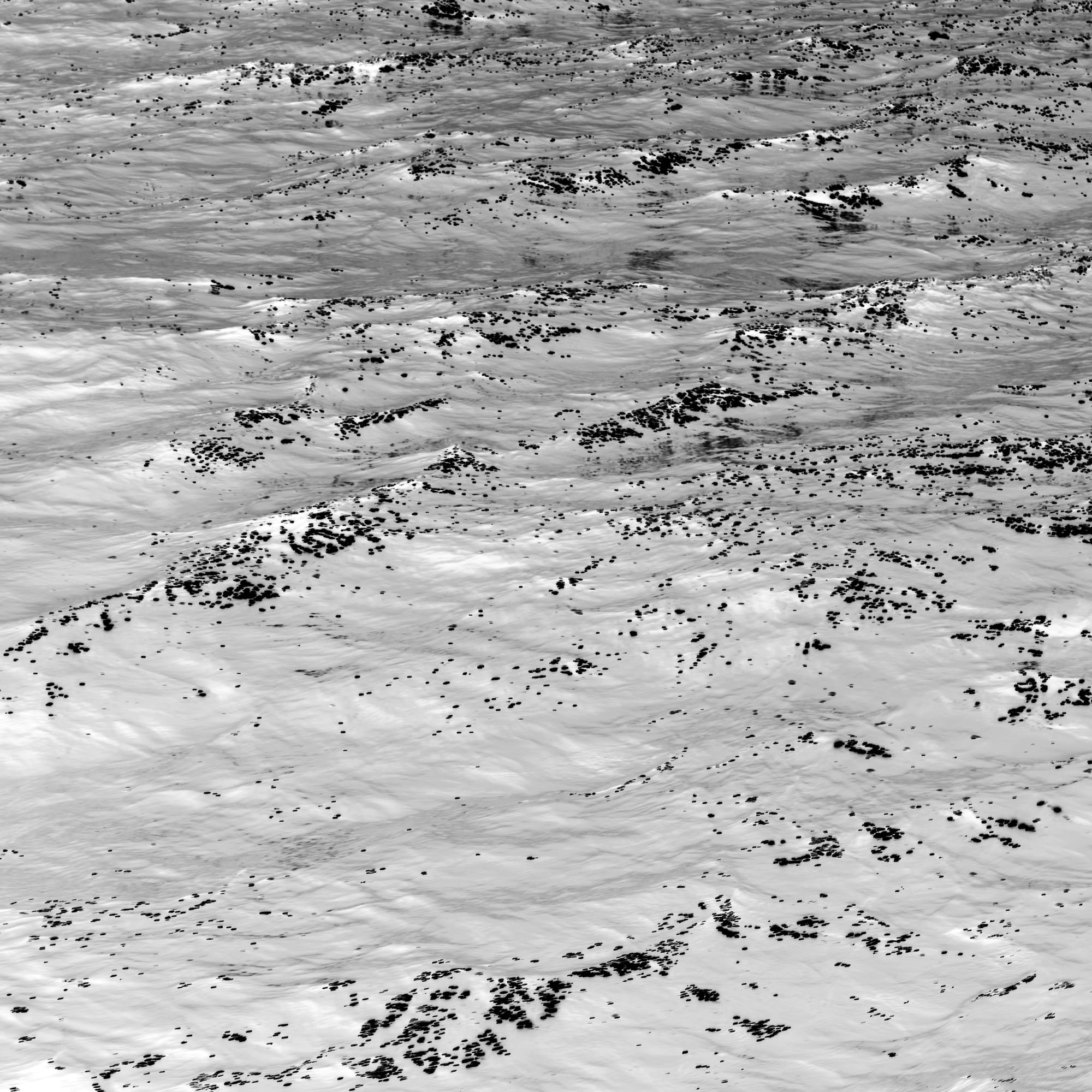
That uncertainty is especially important in works such as Silver Syllabus: The Metaxy Trace, where moisture, residue and fine lines can be read as glass, skin, a map or an atmospheric field. Window Delta makes the relationship even more explicit: marks on a surface begin to suggest a much larger river delta or branching terrain. Liquid Ice reverses the logic again. A moving water surface appears like a vast snowfield or frozen aerial landscape, so liquid matter takes on the visual authority of solid geography.
I am interested in these shifts not as optical tricks, but because similar structures genuinely recur across very different scales. Photography can isolate them and make the viewer negotiate between the microscopic and the planetary. That also has an ecological resonance for me: very large processes are often encountered through very small signs, such as a droplet, a residue, a ripple or a change in surface.

Are you drawn to the space between recognition and abstraction?
Yes, that threshold is one of the places where I feel most at home. I am not trying to make completely non-referential abstractions. I usually want a trace of the physical world to remain, because the tension between what we recognise and what we cannot quite name keeps the image active. If a photograph explains itself immediately, it can close too quickly; if it loses every connection to material reality, it may also lose the friction that interests me.
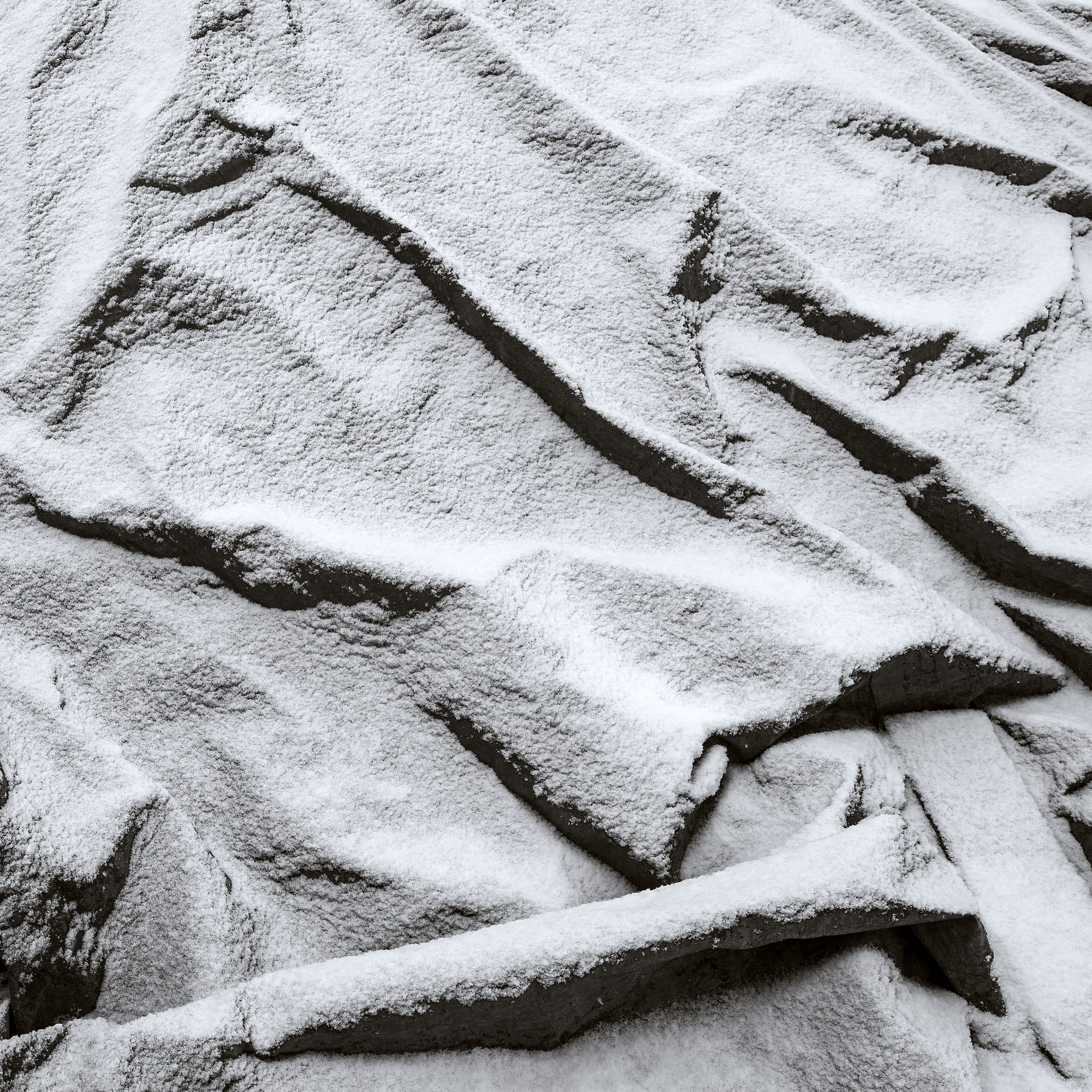
Inside and Out holds that balance through a recognisable architectural element that is made spatially uncertain by condensation. Light Script still belongs to a pane of glass, yet the marks begin to behave like an independent writing system. Frozen Shroud takes another route: frozen water suppresses much of the local detail and turns snow-covered folds into ridges, fissures and planes. The image remains tangible, but it can also be read almost as terrain or drapery on a monumental scale.
I do not see this uncertainty as a puzzle that the viewer is supposed to solve. It is a way of slowing perception. My background in painting probably contributes to this, because I often register a photograph first as surface, rhythm, colour or tonal structure and only afterwards as a named object. I hope the viewer can move back and forth between those modes of seeing.
What draws you to the intersection of artistic and scientific observation?
Scientific and artistic observation begin from a similar act: paying close attention. Their aims are different, of course, but I find the meeting point extremely productive. Through exchanges and projects connected with scientific and environmental institutions, I have become increasingly attentive to processes, systems, temporal scales and material cycles, to what is happening within a landscape or substance rather than only to how it appears at first glance. At the same time, art allows me to preserve ambiguity, association and emotional response rather than resolving the observation into a single explanation.
Water as a Scriptor sits very naturally at that intersection. Condensation, reflection, currents, residue and changes of physical state are real phenomena; the photographs do not need to invent them. But I am not using photography to illustrate a scientific diagram. I am interested in what those processes do to perception. Citrinitas, for instance, gives a material event an alchemical and symbolic resonance, while Frozen Shroud makes a phase change perceptible through texture, covering and tonal reduction.
Scientific knowledge can sharpen the act of looking, while art can return strangeness to something we think we already understand. Ideally, the two approaches do not compete. They create different forms of attention to the same material world.
How has Water as a Scriptor changed the way you see the everyday, and where might it take you next?
Very much so. The series has changed what I consider worthy of sustained attention. Condensation on a window, residue after water has evaporated, reflected light on a wall, a puddle, frost or a shifting ripple can now become an event rather than visual background. I have become more interested in processes than in stable objects, in what something is doing, changing or recording at a particular moment.
Frozen Shroud represents an important extension of that way of seeing. Here, water no longer writes through flow or transparency but through its frozen state. Snow covers and edits the underlying forms, suppressing colour and detail while making seams, edges and folds more pronounced. Water can therefore inscribe by veiling and simplifying as much as by drawing a visible line. That opens another field of possibilities.
I would like to continue exploring transitions between liquid, vapour, ice, reflection and residue, as well as the way water interacts with urban and industrial materials. More broadly, I increasingly think of photographic techniques, such as macro observation, selective focus, movement and shifts of scale, as instruments of perception rather than effects. Water as a Scriptor may be a defined series, but the method behind it remains open: to let the material world participate in making the image, and to use the camera to make its fleeting visual language visible.