


Photography has long been described as a universal language. A single image can communicate emotion, memory and meaning without requiring a single word. For most photographers this is a creative choice. For Frank Muldowney, it became a necessity.
Following brain surgery almost 40 years ago, Frank developed Wernicke’s aphasia – a language disorder that affects the brain’s ability to understand spoken and written language. Although intelligence remains intact, conversation can become fragmented and difficult to follow, as if words arrive without their usual meaning.
Remarkably, Frank lived with the condition for nearly four decades before finally learning its name in 2024.
“I lived with Wernicke’s aphasia for almost 40 years after brain surgery, without knowing what the condition was until 2024.
The world of straight sentences suddenly stopped working... I lay in the hospital bed, listening to the silence. And beside me, there was a chair. No one spoke about it. No nurse moved it. No visitor sat in it. But it stayed there, patient, as if it had always been waiting. The chair never spoke. It simply listened. And somehow, that was the first language I could understand again.
As no speech therapist can be with you 24 hours a day, I learned to live internally. Language became mostly noise, so I learned instead through images, music and silence.”
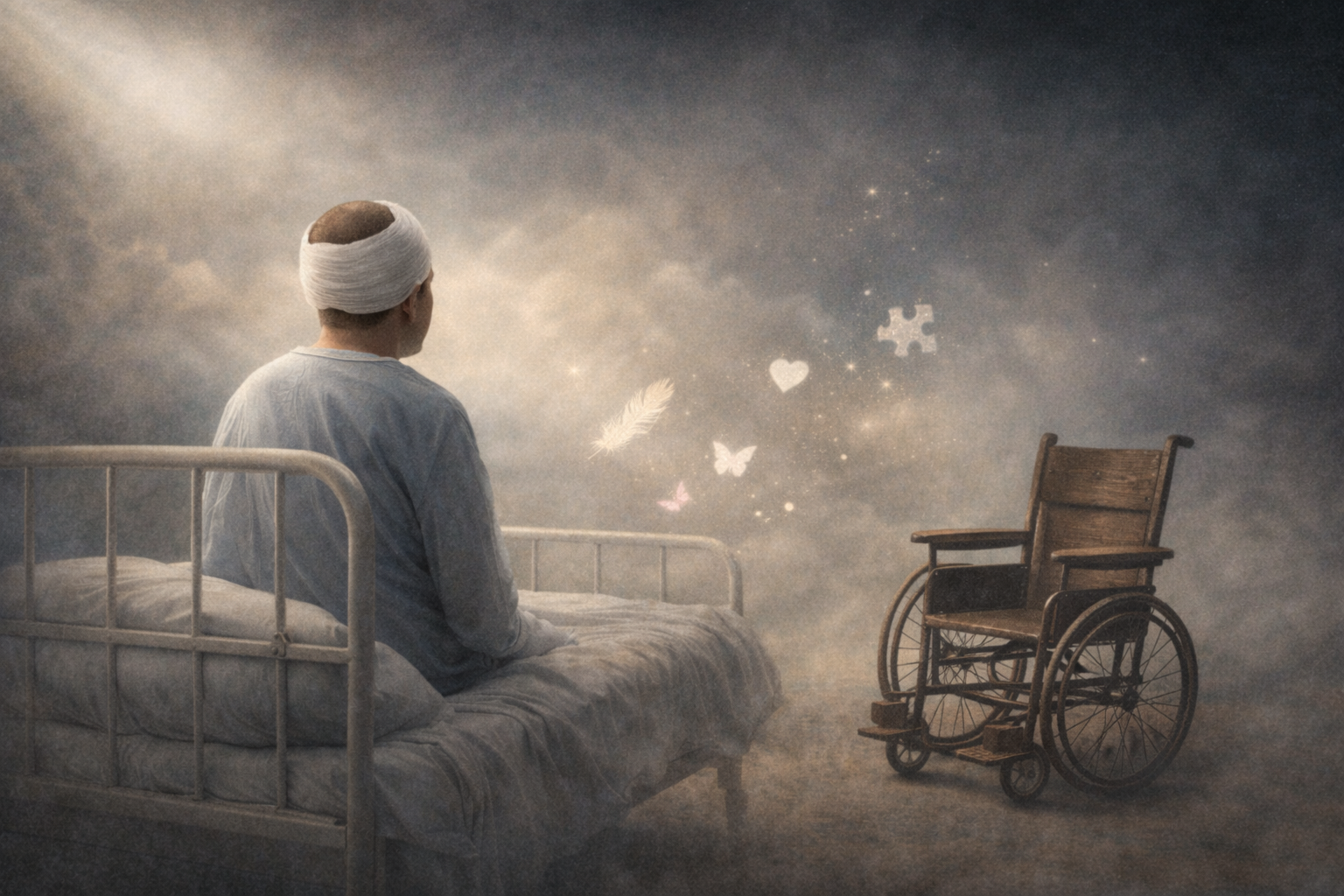
Rather than relying on words, Frank gradually discovered another way of understanding the world. Meaning no longer arrived through sentences. Instead, it emerged through colour, rhythm, emotion and visual imagery.
His book, Aphasia – The Speechless Language of the Soul, currently in progress, explores this extraordinary inner world. Rather than explaining aphasia from a clinical perspective, it invites readers to experience what it feels like from the inside. “Most people think ideas come from words. Aphasia teaches you they often come from the quiet spaces between them.”
Seeing before words
For photographers, we often talk about seeing an image before pressing the shutter. Frank’s experience suggests that this process may begin even earlier than conscious thought.
His ideas rarely appear as fully formed pictures. Instead, they emerge gradually.
“They begin as feelings rather than pictures. When I stop thinking, colours, emotions and patterns slowly appear.”
The resulting mental images feel less like memories or photographs and more like dreams infused with emotion.
“They are more like dreams mixed with feelings. I never know if they come from the past or the future. I just wait to see where they lead.”
It is a fascinating reminder that visual perception is not simply about recording what our eyes see. Long before language enters the process, our brains are already interpreting, connecting and assigning meaning to colour, shape, rhythm and emotion.
This different way of experiencing the world is beautifully captured in one passage from Frank’s manuscript:
“As a child I noticed the strange theatre of the world. People rushing everywhere with great seriousness, as if the script must never be questioned. It often reminds me of the old films, where quiet characters move through chaos while the audience sees the comedy hidden inside it.
Aphasia guided me from the stage into the seats to observe.
From there I began to watch life differently. When words lost their authority, other things appeared — expressions, patterns, silence, the small meanings that live between sentences and the words.
And then another thought arrived.
That the cinema itself is like the universe — a void of open space waiting to be filled. Each person brings their own story, their own imagination, their own dreams to the screen. The film is never exactly the same for two people.”
There is something profoundly photographic in this way of observing. Many photographers discover that once they stop looking for obvious subjects, they begin to notice subtle expressions, recurring patterns, the quality of light, and moments of quiet significance that might otherwise pass unnoticed. The world itself has not changed; only the way it is being perceived.
“My senses work together. Images, feelings and rhythm come first. Words come last.”
Small details that might once have gone unnoticed now naturally draw his attention.
“Small details and patterns stand out much more. Colours, music and symbols often feel connected and meaningful.”
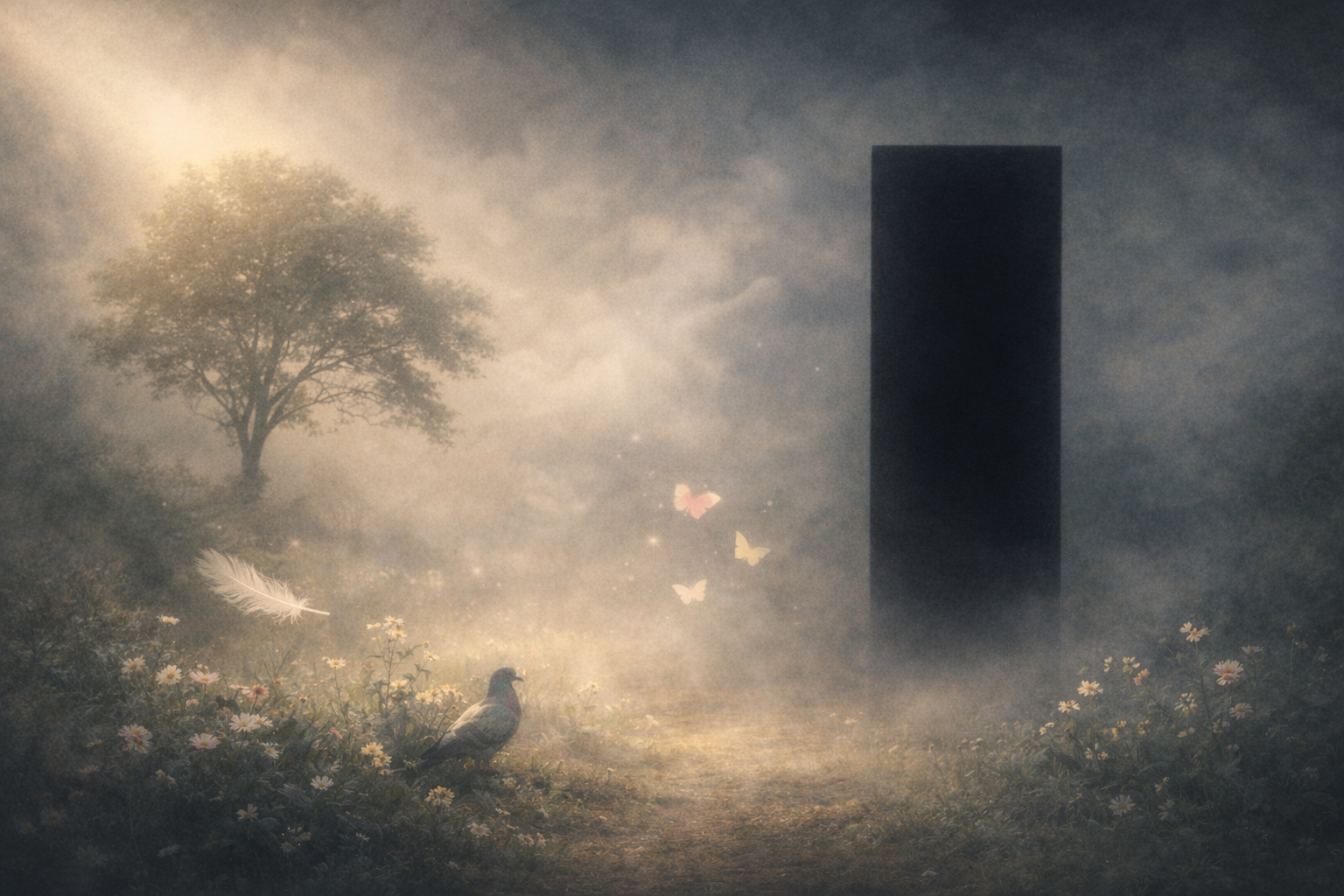
Trusting intuition
Photographers often speak about recognising a successful image instinctively, even before they understand why it works.
Frank experiences something very similar.
“I don’t analyse it. I simply know by the feeling.”
Trying to explain that feeling in words comes later – and sometimes too late.
“I know instantly. By the time I try to explain it in words, the feeling has already changed.”
It is a creative process driven less by analysis than by intuition, where emotion becomes the measure of authenticity.
Giving shape to the invisible
As Frank searched for ways to communicate experiences that existed largely beyond language, new creative tools helped him translate those inner impressions into images. Those visual concepts later became the basis for coloured-pencil artworks and gradually helped him shape the words for his book.
The images themselves are not illustrations in the traditional sense. They form part of the language through which the story is told. “I can only describe the tip of the iceberg. Everything beneath it is beyond words.”
Photography beyond description
Although Frank’s story is deeply personal, it speaks to something familiar for many photographers.
The most memorable photographs are rarely those that simply document a scene. Instead, they communicate something less tangible: a feeling, an atmosphere, a memory, or an experience that cannot easily be explained.
Perhaps that is why his advice to photographers feels so universal:
“Photograph what you genuinely feel, not just what you see.”
As he continues writing Aphasia – The Speechless Language of the Soul, Frank hopes to help readers understand what it feels like to live with aphasia. Not simply through words, but through images, symbols and emotion.
“In a way, this reminds me of the message humanity once sent into space — a record of sound, music, and meaning, carried into the unknown with the hope that something, somewhere, might understand.
This is my message.”


