


For Australian photographer Bailey Reinke, photography and travel have always gone hand in hand. From remote Pacific islands and the Central Asian steppe to the deserts of Oman, Bailey’s camera has opened the door to unfamiliar places, people, colours and small details encountered along the way. Rather than being limited to one genre, Bailey photographs whatever inspires a second look. In this interview, Bailey reflects on travel, storytelling, planning and spontaneity, and how carrying a camera has become a way to slow down, pay attention and see more.
Can you tell us a little about yourself and how your photography journey began?
I’m a Sydney-based photographer with a simple mission: to see as much of the world as I can and document it all with my camera. I like to think I have no rules. I capture landscapes, people, wildlife, architecture, everyday moments and everything in between.
Photography has been part of my life (and really, my purpose) for a long time now. I can trace my origin story quite precisely to Christmas Day 2010. It was as special as it was straightforward. I remember unwrapping a little Nikon DSLR and running immediately outside to capture anything and everything I could in our backyard. The photos turned out utterly awful, but that didn’t matter. The way I felt then is the same way I feel behind the camera today: alive.
Since then, photography has been a constant in my life. I’ve continued to teach myself and refine my eye through years of travel, experimentation and simply by taking thousands upon thousands of shots.
My dream is to travel and take photos full-time. For now at least, my day job, although very far removed from photography, has taken me to some pretty incredible, off-the-beaten-track places: Nauru, Tonga and Brunei among them. Naturally, I’ve taken my camera with me to those places, and I plan on taking it along with me to many more.
What came first, travel or photography, and how have they influenced each other?
They’ve really gone hand in hand. It’s definitely a symbiotic relationship.
It’s actually hard for me to imagine one without the other. I remember taking my camera with me on my first overseas trip to Thailand and thinking how special it would be to take photos back home to show my friends. That made more sense than buying souvenirs to me. This was well before social media, so I literally had the photos printed to pass around at school like it was show-and-tell. After that, I found that the more photos I took, the more I wanted to travel, and vice versa.
Photography has certainly changed how I travel and the kinds of things I do when I’m someplace new. It’s made travel less about convenience and comfort and more about experiencing places with an air of curiosity and patience. I’m much more willing these days to go out of my way to see something at the right time, even if the right time means waking up well before sunrise and waiting patiently to get the lighting exactly right.
The other wonderful thing is that photography has taken me to places I never would have thought to travel otherwise. I’ve followed my camera to the Central Asian steppe, the Atacama Desert in Chile and remote islands in the Pacific. The landscapes, the people and the lived moments I’ve experienced in these places have never let me down.
What catches your eye when you arrive somewhere new?
You’re right, my work covers a lot of ground! As it happens, I used to be hesitant to branch out and photograph anything other than landscapes. I think part of that was feeling as though I needed to have a neatly defined style or consistent subject matter to really earn the title of photographer. Over time, though, I came to realise that I was missing out on so much, especially when I was travelling.
Nowadays, I try not to keep to a theme or put too many boundaries on what I shoot, because I’ve learned that the magic is in experiencing and documenting it all. There are two things that catch my eye above all else, though: colour and what I would call ‘character’.
Ultimately, it’s less about what the subject is and more about what stops me in my tracks and makes me look twice. That could be a particularly bold or rich colour, an interestingly framed city scene or even a stranger’s smile. It can almost feel like being on autopilot: before I know it, I’ve stopped and I’m viewing something through my camera with bated breath.
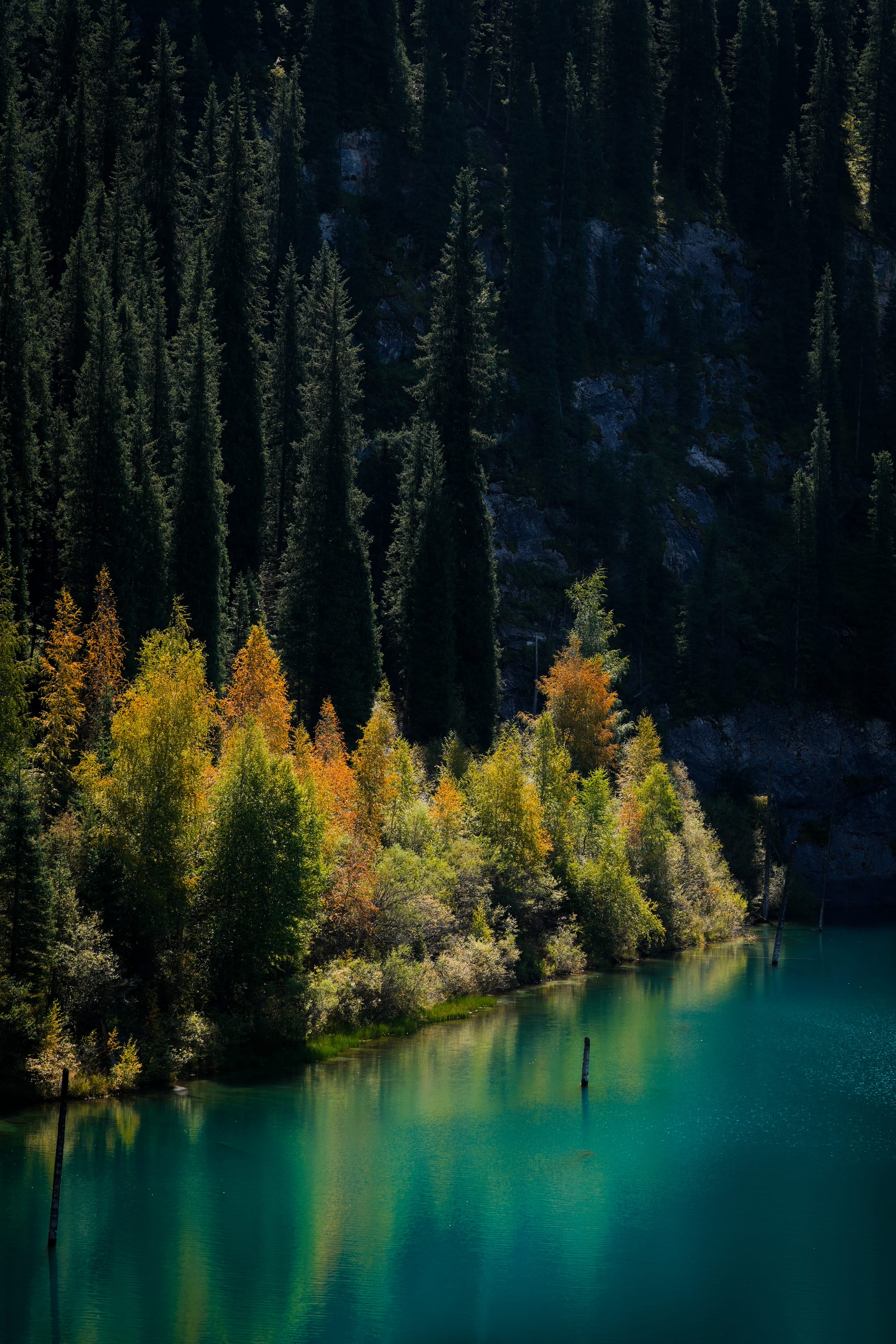
It can also be something much quieter: the way shadows fall on a lake or the way a leaf glows in sunlight. To me, these small details create character worth capturing. Really, what I’m looking for are little moments that tell a big or beautiful story, and I enjoy having the freedom to tell whatever those stories are.
How much do you plan your photographs and how much do you leave to chance?
Admittedly, I’m very Type A. I love to plan things and usually have a pretty detailed itinerary put together before I travel anywhere. That includes knowing exactly what I want to see, how to get around and, often, what I want to photograph. My itineraries usually involve scenic viewpoints that look over the city or day trips to nearby national parks I know will deliver on photo opportunities.
That said, most of my favourite shots seem to have fallen into my lap, simply because I was in the right place at the right time. You can never plan for lighting, weather, little interactions or happenstance. Whether it’s pulling over on the side of the road to capture a perfect sunrise or getting lost in a big city and wandering through the backstreets, I’ve learned to lean into the moment and to always have my camera handy, in case the photograph simply presents itself.
Do you have a favourite photograph or travel destination?
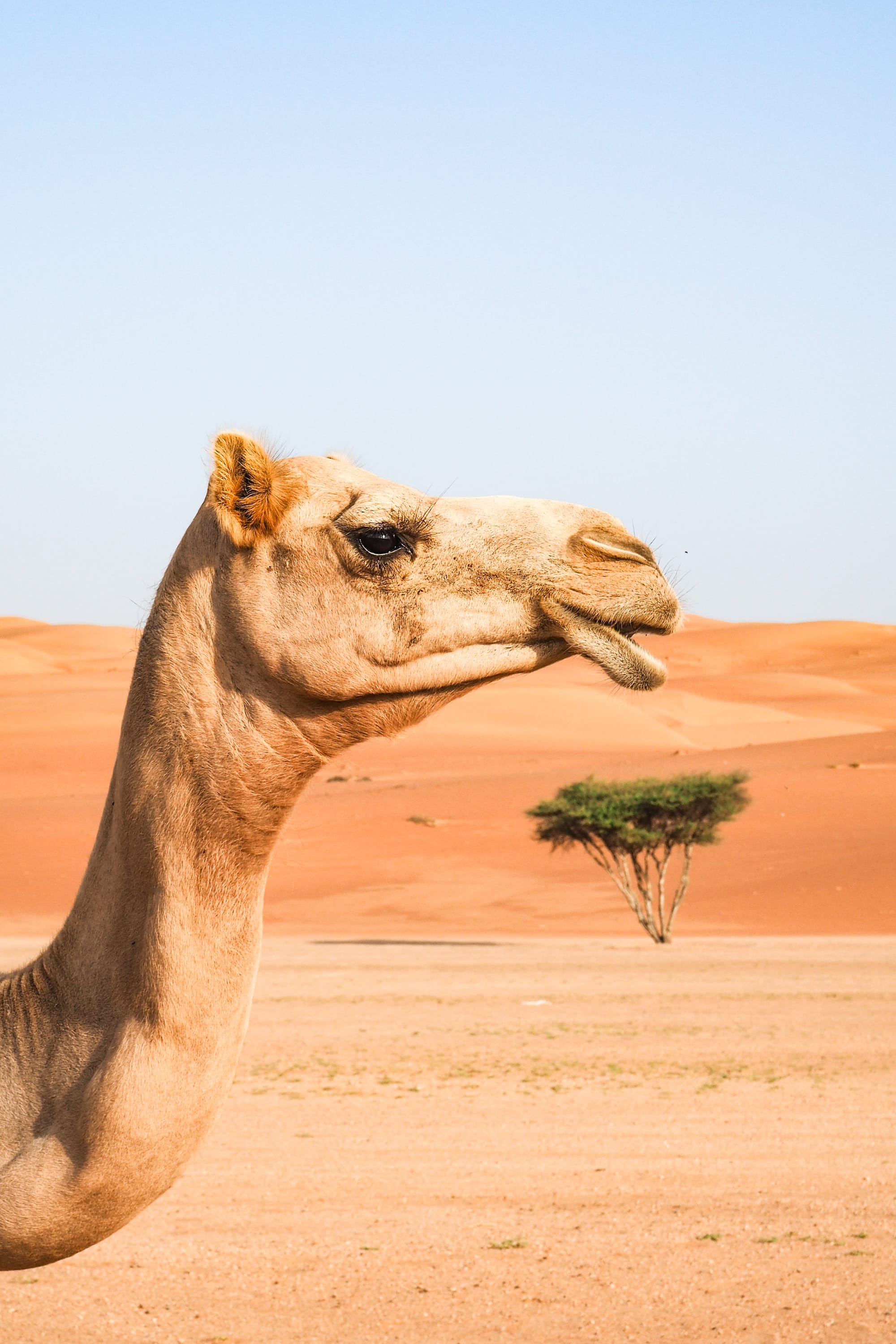
That’s a very tough question. I’d have to go with Oman, both as a travel destination and as the subject of my favourite photo. My trip there was memorable for a few reasons.
First off, I’ve never been anywhere like it: one minute you’re climbing endless sand dunes and swimming in verdant oases, the next you’re winding through narrow alleys in a bustling market or standing atop an ancient fort. It was also the first international trip I was able to take after several years of border closures, thanks, of course, to COVID. But above all else, it was memorable because I did it as a road trip with my dad.
Most of the time, we had no phone service and were staying in places where you could go days without seeing another soul. It was incredible to spend that time together and to fill my days exploring remote parts of the country with nothing to do but use my camera.
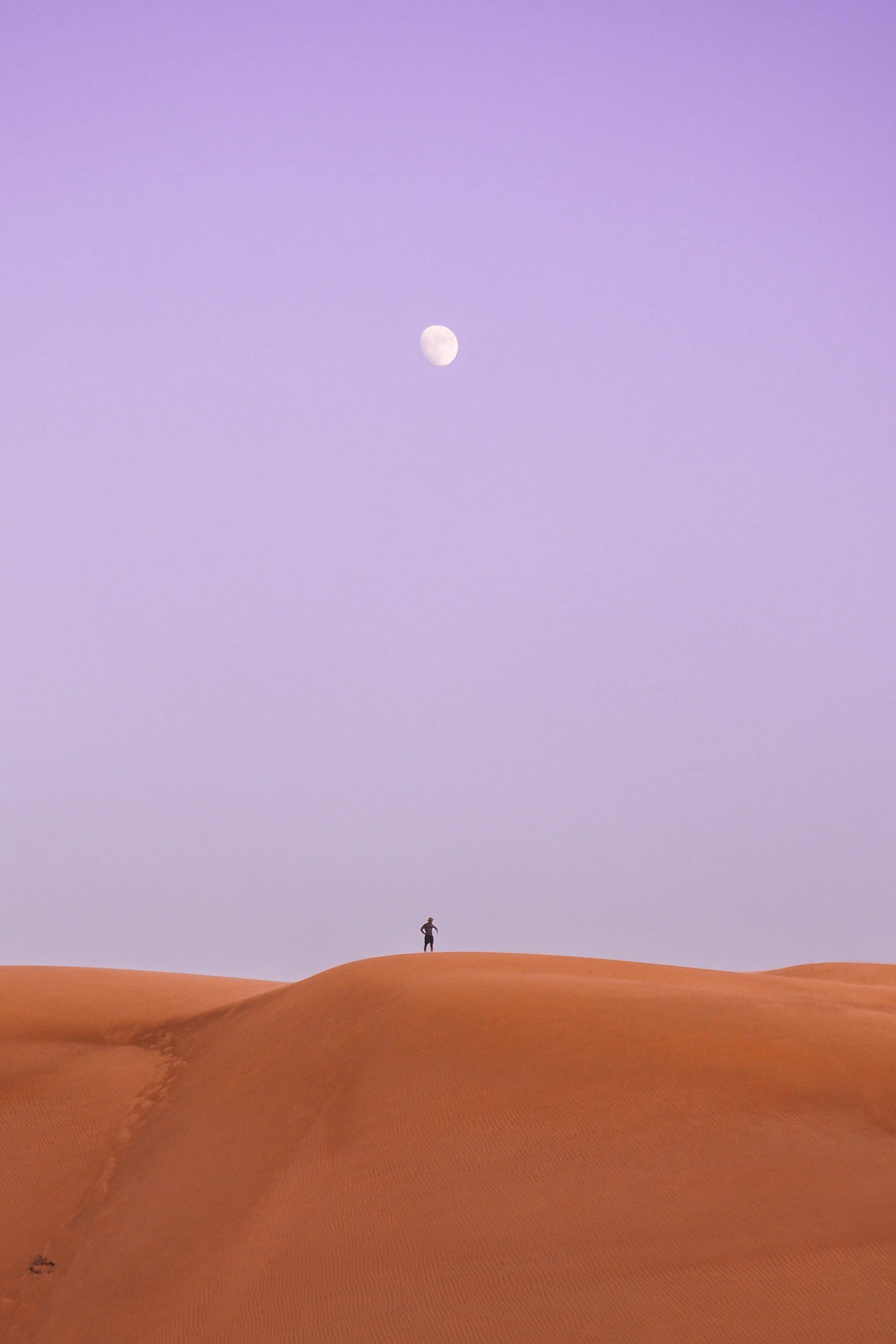
That trip gave me many photography highlights, but my favourite photo is a pretty simple one: a man high up on the dunes at sunset. The full moon above him and the purple twilight change the whole atmosphere of the photo, and it was one of those shots I couldn’t have planned to take ahead of time. It ticks both of my boxes: colour and character.
How do you photograph people and cultures respectfully?
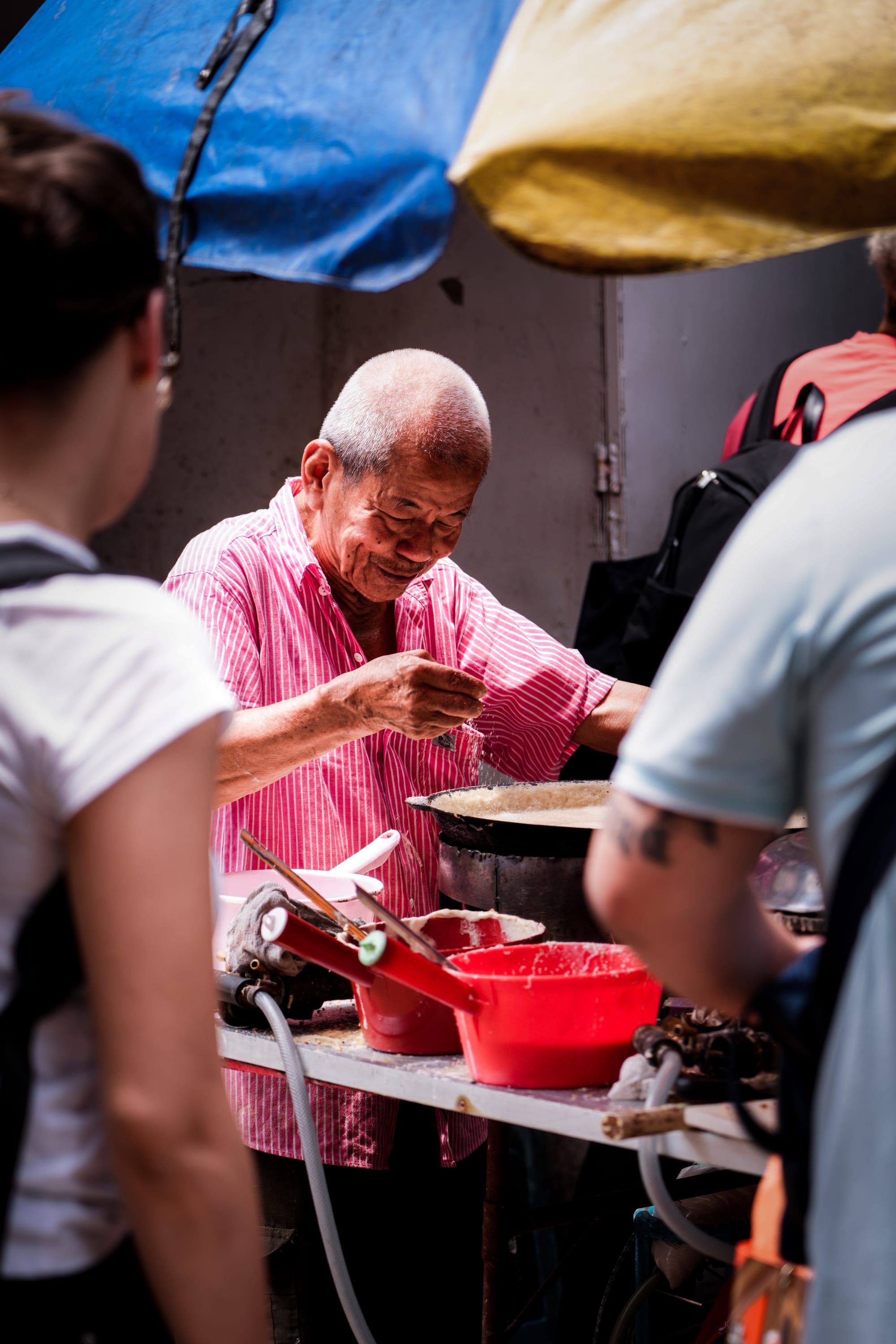
There is a delicate balance here. The last thing I want to do is be invasive or disrespectful, but part of the charm is capturing people in candid or stolen moments, going about their lives. Those are the stories I want to tell.
If I do take a photo of someone, I’ll ask them if it’s okay for me to publish it, and I’ll offer to send it to them if they’re interested. Broadly, I try not to photograph people when they are in the midst of something too intimate, emotional or personal.
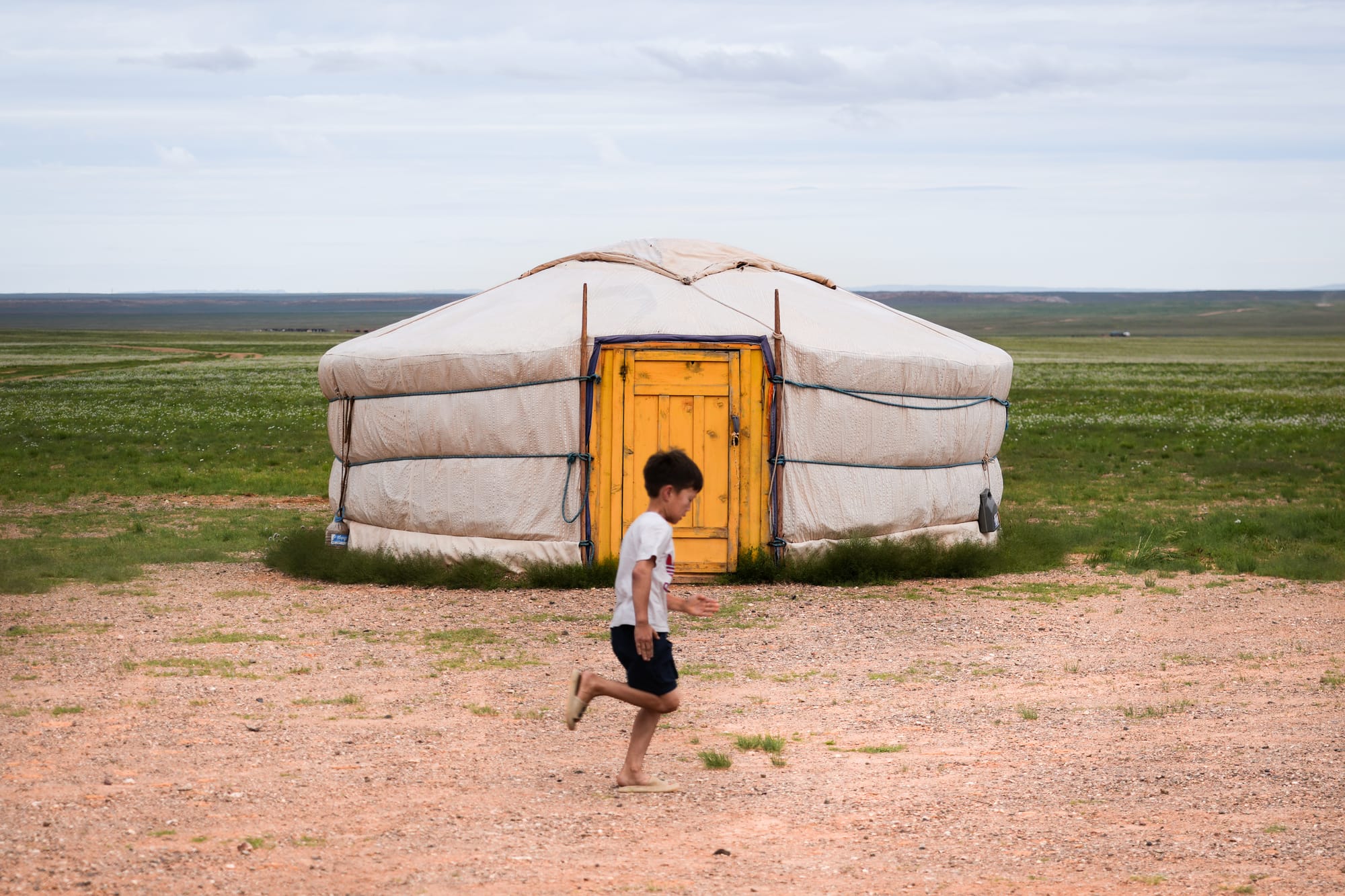
Other times, I’ve found that people are actually excited to get in front of a camera to proudly show off their culture. I love when that happens. In Mongolia, for example, I was lucky enough to stay with a local family who were more than happy to let me take their photo.
What makes a strong travel photograph for you?
It’s certainly a culmination of all those things, but I think a strong travel photograph delivers a unique perspective or offers something unexpected. It’s something that catches you off guard and piques your interest. Even better, it’s something that makes you want to see the place for yourself.
It could be something totally unassuming and uncomplicated; again, even quiet, little details are enough. Maybe it’s a famous monument seen from a surprising angle or a well-known landmark framed in a way you’ve never seen before. Maybe it’s locals playing chess on the street outside their store. Whatever it is, I think a strong travel photograph offers a window into the everyday life of the people who live there.
What role does post-processing play in your photography?
Most of the post-processing time for me is spent sifting through the hundreds of photos I’ve taken and determining which tell the best story. Sometimes, you can only really tell after an initial edit. That process can take quite a while.
A lot of it is just masking: accentuating the light and shadow and leading the eye to where I want it to go. That said, I’m hyper-conscious of not overdoing it and detracting from the integrity of the image. Sometimes, a little boost in saturation or exposure is enough. Other times, if the lighting is perfect, doing nothing is more than enough.
What are your thoughts on AI in photography?
I’m very anti-AI when it comes to the arts. I can’t imagine a place for it, certainly not in my own work. I think AI takes the humanity out of photography, which is ultimately a means of storytelling. I can’t tell others what to do, but I’m not really interested in stories that aren’t told by people.
What has travelling with a camera taught you about seeing differently?
I think this is what I appreciate the most about photography.
Simply put, travelling with my camera has taught me how to stop. To take a breath, find the right angle and appreciate the little details and curiosities hidden around every corner. That’s quite a feat for someone like me, who is very impatient by nature. It’s almost as if time is suspended when I’m looking through the viewfinder. In many ways, it gives me more of an appreciation for what’s directly in front of me.
In a similar vein, it’s also taught me that there’s beauty and magic worth capturing everywhere, especially in broken or otherwise overlooked things. What I’ve realised is that, sometimes, a crack in the facade of a building is what ‘makes’ the photo.


